Cancer support in Lincolnshire focuses on providing support for our patients during and beyond their cancer diagnosis. Find out more about the work we are doing across Lincolnshire to support our local population.
Reviews, HNA's & Treatment Summaries
Cancer Care Reviews
A CCR is an essential conversation that forms part of personalised care, and it helps people to talk about their concerns, understand what help and support is available to them in their local community, and an opportunity to offer information that might initiate supported self-management.
A Cancer Care Review (CCR) is a conversation that takes place between a person that has received a diagnosis of Cancer, and their GP or practice nurse. The conversation is aimed at addressing the holistic needs of the person, as well as their diagnosis. It offers the opportunity for the person to talk about their cancer treatment and any side effects of it along with a medication review and advice to be given about prescription entitlement. The CCR offers a place and time to address the needs of the person or their carer by signposting or referring to other agencies, for example physical activity opportunities, and signposting to local community support as well as Macmillan.
QOF Requirements
Changes have been made to the 2021/2022 QOF Cancer requirements, in recognition of the important role primary care plays in supporting a person with a Cancer diagnosis.
QOF now states that contact is to be made to a person who has received a diagnosis –
Within 3 months of a persons diagnosis
After a person has received treatment, and within 12 months of a diagnosis.
QOF also states that practices should use the Macmillan integrated electronic CCR template which supports a good quality CCR.
A Lincolnshire Cancer Care Review Protocol document has been created with the help of the Living with Cancer co-production group. This sets out recommendations about how to deliver a good quality CCR and aims to standardise the deliver good quality reviews across Lincolnshire within Primary Care. This document can be found
A Holistic Needs Assessment (HNA) ensures that people’s physical, practical, emotional, spiritual and social needs are met in a timely and appropriate way, and that resources are targeted to those who need them most. An HNA is a simple questionnaire that is completed by a person affected by cancer, with their CNS, Cancer Care Coordinator or Macmillan Support Worker. It allows them to highlight the most important issues to them at that time, and this can inform the development of a care and support plan. The questionnaire can be completed on paper or electronically.
Evidence has shown providing effective individual HNA and care and support planning can contribute to better identification of a person's concerns. It also enables early intervention and diagnosis of side effects or consequences of treatment. As such, everyone living with or beyond cancer should be offered an HNA and a care and support plan as part of Personalized Care, at key stages on their cancer pathway as part of Personalized Care.
Evidence also suggests that a person’s holistic needs are likely to change at key points in their cancer journey, like after diagnosis and at the end of treatment, or if something else affects their health or social needs. Having an HNA at these points helps to identify the issues that need to be discussed and can be used to continually inform their care and support plan. In Lincolnshire patients should be offered a HNA within 31 days of their diagnosis and then during, and at the end of their treatment.
The information gathered from an HNA can also be shared with the multidisciplinary team (MDT) and the person’s GP, to improve management and care. Any data collected can be used to influence service developments and the commissioning of future services.
Treatment Summary
A Treatment Summary is a letter/ template produced by the specialist doctor or nurse within the hospital setting out-lining the end of a course of cancer treatment or management. The aim of this letter/template is to provide high quality communication between your hospital team and your GP. The letter/template should contain details of any treatment you have received, but also other useful information about alert symptoms that may require referral back to your specialist team, as well as describing possible consequences of treatment, any ongoing management plan as well as any required GP actions to help support you back home. Copies of the completed treatment summary will be sent to you and your GP.
Personalised Follow-up Pathway
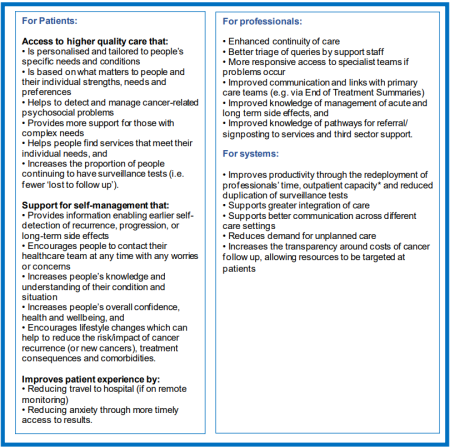
The NHS Long Term Plan for Cancer states that “after treatment, the person will move to a follow up pathway that suits their needs and ensures they can get rapid access to clinical support where they are worried that their cancer may have recurred.” Transforming follow-up care by steering individuals with cancer to the best follow-up pathway to address ‘what matters to you’ rather than ‘what is the matter with you’.
Identifying the appropriate stratified follow up for that individual patient, either self-supported or professionally led isdecided at MDT by the clinical team. This comes with the wrap around personalised support offer through follow up pathways.
East Midlands Cancer Alliance – Living with and Beyond Cancer
In line with national guidance, the East Midlands Cancer Alliance is developing guidelines for all Trusts across the region. The guidance supports the redesign of follow-up pathways. This will ensure a better use of resources across the whole system, from secondary to primary care resulting in a high quality, individualised care package that supports people living with cancer.
Within the Living with Cancer team, we have endeavoured to identify tools and methodology to better support the Lincolnshire community. Some we have developed ‘in house’ and others we have procured from the wider health setting:
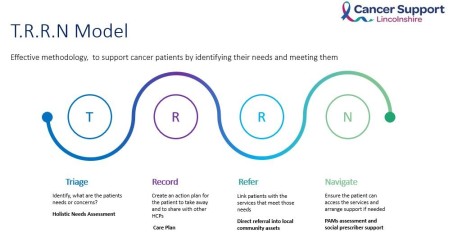
An example of an in-house methodology is the T.R.R.N model, below is a graphic which explains the model:
PAMS - Patient Activation Measures
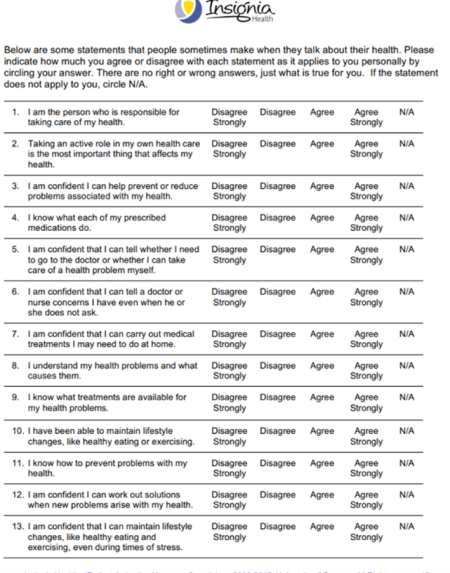
The Patient Activation Measure is a questionnaire that identifies how able or willing someone is to self-manage and or self-care, below is a graphic which gives an insight into the questionnaire.
A cancer specific topic has been created on the Lincolnshire site for GP team-net. Offering relevant local information regarding tumour pathways within ULHT including referral forms, pathways and Patient information leaflets.
This is a free online cancer education platform, offering both e-learning courses and webinars, developed for primary care professionals across England, aiming to improve cancer outcomes, facilitate early diagnosis and improve patient experience. The platform has been nationally funded by Health Education England and is intended to be used by all professionals across PCNs and Practices.
Somerset Cancer Register (SCR) provides a Remote Monitoring System that is integrated and enables a complete electronic cancer record for the patient. The digital RMS covers breast, colorectal, prostate, testicular and thyroid tumour sites. More tumour sites will come online soon.
RMS links to SCR which means demographic and clinical data about the patient will pull over when the patient is registered. There is also a dynamic lookup with data captured in SCR, so you will always have access to the latest information about the patient via RMS.
RMS covers:
Ability to create a personalised record for each patient
Customise follow-up activities to suit patient needs
Charting of patient results against agreed thresholds and safely monitor
Real time view of SCR investigation data
Configurable letters
Easy to use worklist for caseload management and monitoring of tests
Supplementary alerts to assist staff or patients with specific activities
Interoperability of data, reducing the need for double data entry.
The Breast Pain Pathway was launched in Lincolnshire March 2022 and is now actively receiving referrals. It has been created for people presenting with Breast Pain as a single symptom.
Breast Pain alone is not a symptom of cancer, so this pathway has been designed to offer an appropriate service for people where they are not seen in a cancer clinic setting and they do not experience increased anxiety related to cancer unnecessarily. This pathway also helps to reduce the demand on the Breast 2ww pathway so that people with a genuine suspicion of cancer are seen quicker, and they are not delayed by an unnecessary appointment being booked in before them.
Please see the links below for the Breast Pain Pathway referrals process, and associated documents that support the pathway.
The NHS Long Term Plan sets out strong ambitions to improve cancer diagnosis by detecting cancer sooner. In Lincolnshire, we are working to achieve the ambition that by 2028, the proportion of cancers diagnosed at stage 1 and 2 will rise from around 50% to 75% of cancer patients. As a consequence of realising this ambition, it will ultimately mean that by 2028, 55,000 more people each year could survive their cancer for at least 5 years after diagnosis.
To achieve this work; we are working to ensure that GPs and their teams have the appropriate access to education and clinical decision making support tools to ensure that they are aware of early diagnosis information at a local, regional and national level.
NHS Galleri trial
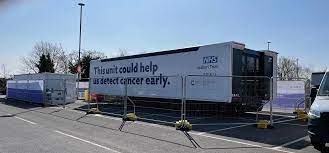
The East Midlands, and therefore Lincolnshire, is one of eight Cancer Alliances across England participating in the NHS Galleri Trial. The trial is a blood test seeking to detect cancer earlier, alongside existing NHS Cancer Screening Programmes. Participants aged 50-77 will be invited via letter from the NHS and invited to attend for a blood test. The trial is running in Lincolnshire between April – May 2022 and will return to the county at a similar time of year in 2023 and 2024. The trial website is a useful resource for finding information for both patients and healthcare professionals.
Listen to the podcast hosted by Greater Manchester Cancer Podcast describing the NHS Galleri trial and the opportunities it brings for the future of cancer screening.
The prehabilitation service supports people with a cancer diagnosis to be in the best possible health before they start their cancer treatment. Preparing patients for their treatment will help them to recover quicker, alongside supporting their longer-term health and wellbeing too. The prehabilitation service is occupational therapy-led. The service works as part of the wider multidisciplinary team that supports people to achieve health and wellbeing.
This communication is to inform you of an imminent change to the Colorectal 2ww pathway. The Colorectal Pathway remains the most challenged pathway in Lincolnshire following COVID; a high number of patients are waiting over 62 days and colorectal backlog makes up 60% of the existing overall 62-day backlog. Urgent action is required to address this.
We have been working on a joined-up approach across the whole system to implement necessary changes to the 2ww Colorectal pathway. Please be aware of the agreement that has now been reached with GP Clinical Leads and ULHT:
From 7th November 2022, we will be using the Rapid Access Colorectal Pathway (RACP) in place of the Colorectal 2WW pathway
The Rapid Access Colorectal Pathway requires set criteria to be met to refer patients into ULHT. Details of the clinical criteria for referring a patient are below:
How do I refer a patient onto RACP?
It is essentialthat a patient referral on the RACP pathway is accompanied with the following:
(4F’s)
FIT result
FBC Result
Ferritin result
Digital Rectal Examination (DRE)
*Please note, a FIT result is not required for Anal Rectal Mass or Anal Ulceration.
If your patient’s FIT result is negative with no concerning symptoms, we ask you to manage, and safety net the patient in Primary Care.
If, however, you remain concerned, please access the advice and guidance via eRS. The Consultant will review this A&G within 48 hrs and either contact you with information to manage your patient in Primary Care or the Consultant will refer your patient onto a routine/urgent or 2WW pathway. This may include diagnostic tests so please prepare your patient for this.
Safety Netting your Patients
Please see below for information on safety netting. Clinical teams should consider:
Providing the patient with clear information about who to contact if they develop new symptoms or if their existing symptoms worsen
Consider using advice and guidance via eRS to guide management of patients with persistent or troublesome symptoms
Consider offering a second FIT test 14 days later if ongoing clinical concerns remain. Results from a recent study show patients with two negative FIT test results have a colorectal cancer risk of <0.04% (1)
Consider a referral to a non-specific-symptoms urgent cancer pathway, if appropriate and there are ongoing concerns about possible cancer
We will be issuing a new referral form via Systm1, EMIS and Ardens, it is imperative that the old 2WW form is not used and is removed if saved locally as any submitted will be returned.
We will be applying an administrative triage in secondary care at the front of the pathway to ensure all elements are complete and the patient is appropriate for referral. If not complete, we will contact the practice to re-refer with the relevant elements completed.
Contact Us
If you require any further clarification, please contact Mr Milind Rao or Jodie Waddington. (Jodie.waddington5@nhs.net)
Rapid Diagnostic Service Non-Specific Symptoms pathway - RDS NSS
(Previously known as The Rapid Diagnostic Concept)
The NSS pathway will focus on introducing a pathway that will fulfil the role of delivering faster and earlier diagnosis as well as improving patient experience for patients with vague but concerning symptoms. This pathway will align to the 7 RDS principles –
NHS cancer screening programmes can help to diagnose cancer or risk of cancer earlier and improve the likelihood of successful treatment. There are three national cancer screening programmes in England.
Cervical screening is offered to people with a cervix aged from 25 to 64. Routine screening is offered every three years up to 49 years of age and every five years from 50 to 64 years of age.
Bowel Screening is offered to men and women aged 60-74, who are sent a home testing kit every two years to collect a small sample of poo to be checked for tiny amounts of blood which could be caused by cancer.
The Lincoln Pelvic Late Effects Service is dedicated to helping people who are 6 months or more post treatment, to manage and live well with the late effects from radiotherapy.
To find out more about the Pelvic Late Effects Service, please refer to the presentation below:
Cancer Care Map is a simple, online resource that aims to help you find cancer support services in your local area wherever you are in the UK. Cancer Care Map is run by The Richard Dimbleby Cancer Fund charity.
Lincolnshire has recently been working closely with Cancer Care Map to include over 580 additional community assets to be added to the Cancer Care Map.
Connect to Support Lincolnshire is an online information and advice library, community directory and marketplace for adults in Lincolnshire.
The website is intended for adults who want to find out about local groups, activities and services within the community.
There are over 600 listings for cancer services within Lincolnshire.
Telephone support and live web chat is provided by Lincs 2 Advice.
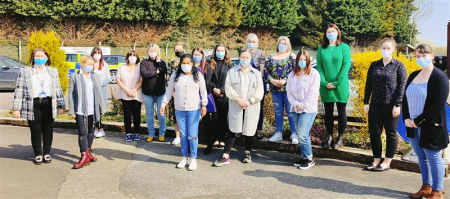
Local communities are at the heart of everything we do. Our Community Care Coordinators work in partnership with local groups and organisations and link closely to Neighbourhood Working Teams and Primary Care Networks to make sure that people living with cancer are able to access support that is right for them in the place that they live.
GP practices are key partners and we help them support their patients through high quality Cancer Care Reviews and through access to health and well-being programmes. We are supporting people living with cancer to ensure they receive support closer to home through up-skilling our partners in acute services, primary care and voluntary organisations.
H.O.P.E stands for Help Overcoming Problems Effectively. It is a licensed programme that helps people who have had cancer to move forward with their lives.
It is free to attend and runs over 6 weeks. Each session is 2.5 hours once a week. It is run by a Macmillan trained HOPE facilitator. This is a health professional from within the Cancer workforce and a volunteer who has had a cancer experience themselves. There are between 6-12 people on each course, and time is spent in facilitated discussions, with group activities, information sharing and ideas for participants to try in between the sessions.
To book a place or find out more information, please call the Macmillan Information and Support Service on 01522 573799
Information kiosks are located across the county to assist the people of Lincolnshire access to information, advice and guidance on an internet connected kiosk. Kiosks are located in a community setting, for example churches and community centres to allow easy access for individuals. There is access to Lincolnshire focused information, supported by Community leaders at the centres to assist people with using the technology.
Kiosks are located in the following areas:
VENUE
LOCATION
FULL ADDRESS
POSTCODE
Bridge Central
Lincoln
Portland Street,
Lincoln
LN5 7NN
Trinity Foundation
Louth
Eastgate, Louth,
LN11 8DJ
The Beehive
Grantham
South Lincolnshire Blind Society,
11a Firkin Street,
Grantham
NG31 6QZ
Marisco Medical Practice
Mablethorpe
Stanley Avenue,
Mablethorpe,
Lincolnshire
LN12 1DP
Trinity Foundation
Gainsborough
Roses Sports Ground,
North Warren Road,
Gainsborough
DN21 2TU
Boston Stump
Boston
Parish Office,
The Rectory,
Wormgate,
Boston
PE21 6NP
New Life Centre
Spilsby
Church St,
Spilsby
PE23 5DU
*TBC*
Youth Community Centre
Holbeach
Boston Rd S,
Holbeach,
Spalding
PE12 7LR
*TBC*
University of Lincoln – Library
Lincoln
TBC
TBC
Look Good Feel Better
Look Good Feel Better is a national charity, with the focus on helping to boost the physical and emotional wellbeing of people living with cancer through free workshops that address issues of skin care / make up / hair care/ wig advice / grooming and nail care. Each session is hosted by trained volunteers within the beauty industry who can tackle some of the problems that might be faced throughout treatment.
To book a place or contact Claire Fowler on 01522 572350 at the Macmillan Information and Support Office.
Shared Lives Cancer
Shared Lives®: Cancer (SL:C) is a new, innovative approach to making qualitative academic research publicly available to support people living with and affected by cancer. It has been developed by a team from the School of Health and Social Care and Lincoln International Institute for Rural Health (LIIRH) at the University of Lincoln. SL:C presents a novel approach to research dissemination through enabling the translation of existing research knowledge into rich, descriptive, user-friendly, lived experiences accounts of cancer. This is presented through a searchable database of lived experience quotes and our collection of lived experience of cancer stories. This, by its very nature imparts a level of credibility to the lived experiences, that cannot be assured through other peer support channels.
We will shortly begin conducting research that will explore experiences of cancer through storytelling which will expand our searchable database of quotes and collection of lived experiences. We also plan to work with experts by experience, academics, researchers, and cancer health professionals, to develop our content and improve SL:C as a digital tool. SL:C does not intend to replace any existing resource available, or provide health advice, but will provide innovative and credible peer support that people living with and affected by cancer can use alongside other currently available resources.